
Lifestyle
Camehoresbay: Unveiling the Hidden Gem for Travelers and Digital Explorers Alike


Lifestyle
Who Were the Pharisees: History, Beliefs, Role in the Bible, and Their Relationship with Jesus

Lifestyle
The Las Vegas Traffic Survival Guide: Mastering the Strip, Side Streets, and Sin City’s Biggest Headache
Introduction
Las Vegas. The name alone conjures images of dazzling lights, high-stakes poker, and a non-stop party that defines the American Dream of excess. But for the millions who navigate its arteries each year—and the growing population that calls it home—there is another, less glamorous reality that defines the city: the traffic. Navigating Las Vegas traffic has become a modern-day challenge, a complex beast born from a unique blend of relentless tourism, rapid population growth, and a desert landscape that funnels millions onto a few crucial highways.
Understanding the nuances of Las Vegas traffic is essential, whether you are a tourist hoping to maximize your time on the Strip, a business owner looking to attract local customers, or a new resident trying to make sense of your daily commute. This comprehensive guide will explore the anatomy of Sin City’s congestion, offering insights and strategies to not just survive, but conquer the Vegas roads. We will dissect the chaos of Las Vegas Boulevard, explore the alternatives of the Interstate 15, and examine the very human behaviors that make driving here so perilous . By the end, you will have a thorough understanding of how traffic works in Las Vegas and how to navigate it safely and efficiently.
The Anatomy of Vegas Congestion: Why is it So Bad?
To understand how to beat Las Vegas traffic, you must first understand why it exists in its current, often frustrating form. The city has become a victim of its own success. For decades, the allure of the casinos and the promise of a tax-friendly, sunny lifestyle have drawn people in droves. However, this rapid expansion has strained the city’s infrastructure, creating a paradox where the very things that make Vegas attractive also make it difficult to navigate .
The first major factor is the sheer volume of visitors. Las Vegas is an international destination, and on any given day, the population of the city can swell by hundreds of thousands of tourists . This creates an unpredictable and ever-shifting demand on the roads. Visitors, often unfamiliar with local traffic patterns, add to the chaos with erratic lane changes and sudden stops as they try to find their hotels or the next casino. As one analysis points out, “the constant influx of millions of visitors and residents… creates a unique and often challenging traffic environment, where high traffic volumes are the norm rather than the exception” .
Secondly, the “Las Vegas paradox” is a major contributor. Longtime residents often complain that “it wasn’t always like this,” bemoaning the growing backups on the I-15 and the 215 Beltway . The irony, as locals often observe, is that many of those sitting in traffic are the very people who moved to the city recently, contributing to the problem they now complain about . This cycle of growth and complaint is a defining characteristic of the modern Vegas experience, creating a self-perpetuating cycle of congestion.
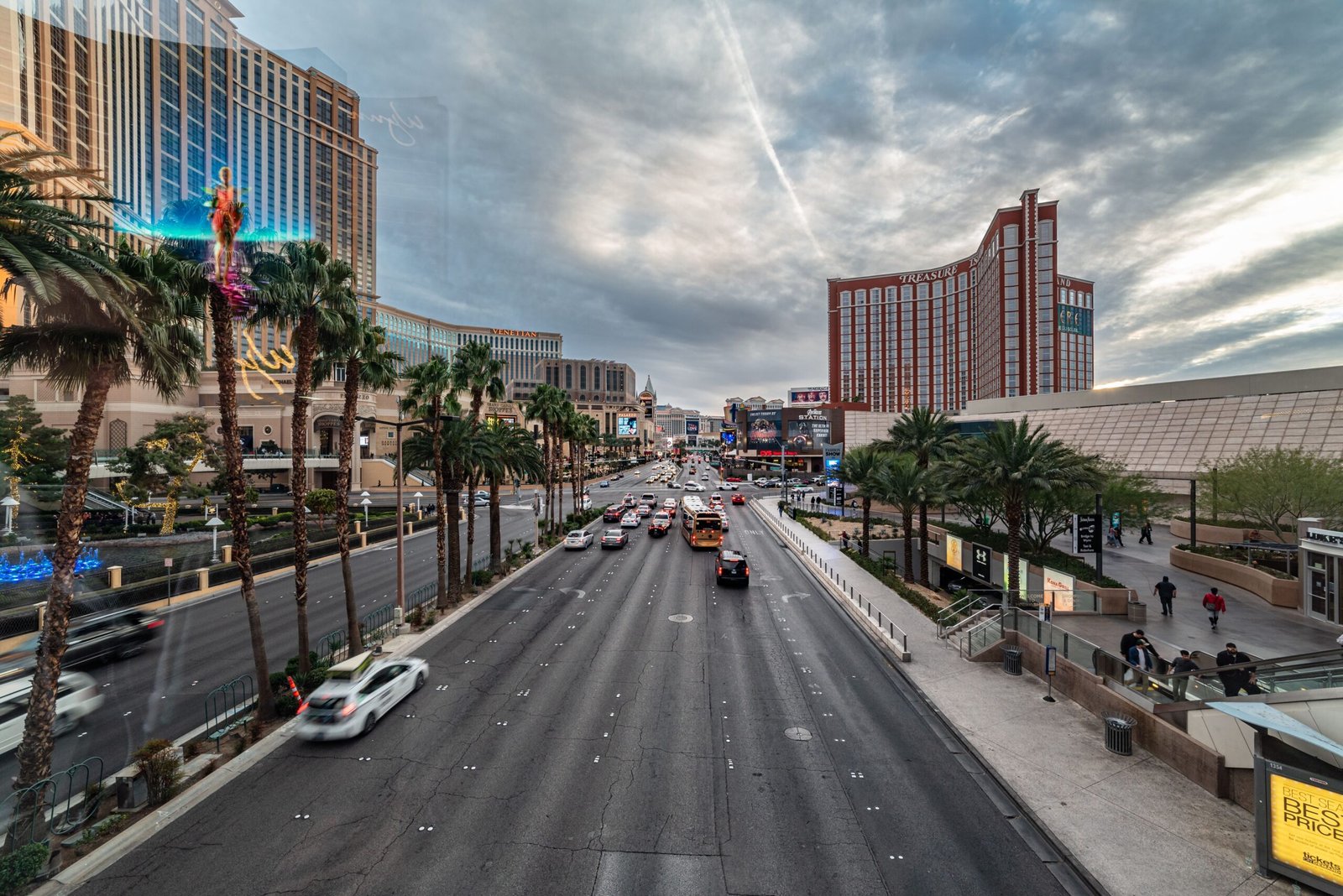
Finally, the city’s layout contributes to the problem. The Las Vegas Strip, the city’s most famous thoroughfare, is a six-lane boulevard that must accommodate a mix of through traffic, pedestrians, and the constant flow of vehicles entering and exiting massive resort driveways . This is not a highway designed for speed; it is a complex, stop-and-go environment where drivers must be constantly vigilant.
Decoding the Chaos: Navigating the Las Vegas Strip
The Las Vegas Strip is the heart of the city’s tourism industry, but it is also the epicenter of its traffic woes. Driving on Las Vegas Boulevard requires a unique set of skills and a hefty dose of patience. The stretch from the Mandalay Bay to the Stratosphere is a microcosm of all the city’s driving challenges, combining heavy traffic with a constant flow of pedestrians and rideshare vehicles . Navigating the Strip effectively requires understanding its unique rhythm and knowing when to avoid it entirely.
One of the most critical challenges when driving on the Strip is the constant flow of pedestrians. Many visitors, caught up in the excitement of the city, may cross streets unpredictably, even when they are not at designated crosswalks . As a result, drivers must always be prepared to yield, even if a pedestrian seems to be acting recklessly. Furthermore, traffic signals on the Strip are timed differently than in other parts of the city, specifically designed to accommodate the high volume of both vehicular and foot traffic. This means longer waits at red lights and a much slower pace overall .
Parking is another major hurdle on the Strip. While many major hotels and casinos offer free or valet parking, finding a spot, especially during peak hours and special events, can be a frustrating and time-consuming endeavor . For those just looking to explore multiple properties or enjoy a meal, the hassle of parking can often negate the convenience of having a car. Many experts suggest that for short trips along the Strip, it is often easier to use rideshare services or taxis to avoid the parking hassle . For tourists, the Strip is an experience best enjoyed at a leisurely pace, and trying to rush through it by car is a recipe for stress .
Beyond the Boulevard: Navigating Off-Strip and Suburban Roads
While the Strip may be the most famous road, the traffic challenges in Las Vegas extend far beyond it. Venturing off the Strip, into areas like Downtown, the Arts District, and the sprawling suburbs, presents a different set of driving considerations. For locals and visitors alike, knowing how to navigate these off-strip areas is crucial for avoiding bottlenecks and discovering the authentic side of Las Vegas .
Downtown Las Vegas, centered around the Fremont Street Experience, offers a taste of old Vegas charm, but driving here requires attention to one-way streets and pedestrian-only zones. The Fremont Street Experience itself is closed to vehicular traffic, so drivers must plan to park in one of the nearby garages or lots . Traffic patterns in downtown can also be confusing for first-time visitors, with many streets changing direction during peak hours to accommodate traffic flow. Paying close attention to signage is essential to avoid driving against traffic.
The suburbs of Summerlin and Henderson, to the west and southeast of the city, offer a more traditional suburban driving experience, with wide boulevards and well-marked lanes . However, drivers will encounter more roundabouts than in other parts of the valley, which require yielding to traffic already in the circle . These areas also feature extensive networks of bike lanes and walking paths, so drivers must always be on the lookout for cyclists and pedestrians, especially near parks and schools. Understanding the geography of the Las Vegas valley is a key step to avoiding its traffic. Knowing which roads to take and when to take them can save significant time and frustration.
The Ebb and Flow: Understanding Traffic Patterns and Timing
Traffic in Las Vegas is not a constant; it ebbs and flows according to predictable patterns shaped by the city’s dual identity as both a tourist destination and a residential community. Mastering these patterns is the single most effective way to reduce travel time. The city experiences its peak traffic during the weekends and evenings, especially around the Strip, as visitors flock to the casinos and shows . Special events, such as concerts, conventions, and sports matches, can significantly impact traffic, leading to unexpected congestion . Similarly, morning and late afternoon rush hours on weekdays see increased traffic as locals commute to and from work .
Interestingly, recent data shows a shift in how visitors arrive. While a third of all Las Vegas visitors come from Southern California, the numbers show that air travel and highway traffic follow similar patterns . This suggests that macroeconomic factors affecting one mode of travel often affect the other, indicating a broader trend in consumer confidence and discretionary spending . The passenger numbers at Harry Reid International Airport, for example, have seen a nearly 6% decrease in 2025, reflecting broader changes in travel patterns . This decline in visitor numbers has been linked to economic uncertainty, shifting generational habits, and even the impact of online gaming, which means people no longer need to travel to gamble .
However, for the drivers on the road, these macro-trends don’t change the immediate reality of a jammed interstate. The data confirms that congestion is a persistent problem, and understanding its timing is the most practical solution. Utilizing navigation apps that provide real-time traffic updates and event schedules is essential for planning efficient routes and avoiding the worst of the chaos .
The Danger on the Roads: Why Vegas Traffic is Risky
Beyond the inconvenience, Las Vegas traffic is notoriously dangerous. The combination of high traffic volumes, aggressive driving, and impaired drivers creates a recipe for frequent and often severe accidents. The data confirms a strong correlation between high traffic density and increased car accidents in Clark County . Navigating the city requires more than just basic driving skills; it demands a proactive approach to defensive driving.
Several high-risk driving behaviors are prevalent on Las Vegas roads. Distracted driving is a leading cause of accidents, with many drivers checking their phones or adjusting devices, leading to dangerous lapses in attention . Impaired driving, due to alcohol, drugs, or fatigue, further raises the risks, with drunk driving being treated very seriously by Nevada law enforcement. The state has a zero-tolerance policy and conducts frequent DUI checkpoints, especially on weekends and holidays . Reckless driving, including speeding, abrupt lane changes, and tailgating, is also prevalent, especially in dense traffic, with reports indicating aggressive driving increases accident risk by up to 25% in crowded areas .
Given these factors, defensive driving is paramount. This means maintaining a safe following distance, anticipating the actions of other drivers, and avoiding distractions. It also means being aware of the unique risks posed by the city’s infrastructure. Innovative road design with advanced signage and electronic controls can help guide behavior, but it cannot offset the dangers of reckless or distracted drivers . Ultimately, safety on Las Vegas roads is a shared responsibility that requires patience, vigilance, and a strict adherence to traffic laws.
Conclusion
Las Vegas traffic is a complex and often frustrating reality of living in or visiting “Sin City.” It is a beast born from the city’s unique identity as a global tourist destination that is also a rapidly growing residential hub. The allure of the Strip, the lights, and the shows will always draw a crowd, ensuring that the challenges of high traffic volumes and unpredictable driving conditions will remain. However, by understanding the anatomy of this congestion, from the chaos of Las Vegas Boulevard to the ebb and flow of daily patterns, drivers can navigate it more effectively .
The key to mastering Las Vegas traffic lies in adaptation and awareness. For tourists, this means embracing the leisurely pace of the Strip, utilizing the free parking at major hotels, and knowing when to leave the car behind in favor of walking or rideshares . For residents, it means using navigation apps to monitor real-time conditions, planning commutes around peak hours, and practicing defensive driving to combat the dangerous behaviors that plague local roads . The city is also responding to these challenges, with the airport and other agencies preparing for infrastructure improvements to better handle the influx of visitors .
Ultimately, the traffic is a symptom of Las Vegas’s success. The city’s ability to attract millions of visitors and thousands of new residents each year is a testament to its enduring appeal. While the traffic may be a significant headache, it is also a sign of a vibrant and dynamic city. By going in with a plan, a patient mindset, and a healthy respect for the rules of the road, anyone can successfully navigate the Las Vegas traffic and focus on enjoying everything this remarkable city has to offer . The gridlock may be inevitable, but the frustration is not.
Frequently Asked Questions (FAQ)
Why is traffic in Las Vegas so bad?
Las Vegas traffic is notoriously congested due to a combination of factors: the city’s massive and constant influx of tourists, a rapidly growing local population, and infrastructure that struggles to keep pace with the demand . The Las Vegas Strip, in particular, is a major bottleneck due to its mix of heavy traffic, pedestrians, and constant stops at casino driveways .
What is the best time to drive on the Las Vegas Strip?
The Strip is generally busiest in the evenings and on weekends when tourists are out in full force. To avoid the worst of the traffic, it is often better to drive on the Strip early in the morning or very late at night. However, heavy pedestrian traffic is a constant factor, so patience is always required .
Are there alternatives to driving on the Las Vegas Strip?
Yes. For short trips along the Strip, rideshare services (Uber/Lyft) and taxis are often more convenient and less stressful than dealing with parking . For longer distances, using the I-15 or other side streets can bypass the stop-and-go traffic of Las Vegas Boulevard.
Is it safe to drive in Las Vegas?
Driving in Las Vegas presents significant safety challenges due to high traffic volumes, frequent distractions, and a high rate of impaired or aggressive driving . It is crucial to practice defensive driving, avoid distractions like cell phones, never drive under the influence, and obey all traffic laws .
What are some tips for avoiding traffic in Las Vegas?
To avoid the worst traffic, use a navigation app with real-time traffic updates to find the fastest route. If possible, avoid traveling during weekday rush hours (mornings and late afternoons) and during major events or conventions . When on the Strip, consider parking your car and walking or using rideshares to move between properties.
Lifestyle
The Tyler Matthew Johns Case: A Comprehensive Analysis of the 2025 Henderson Road Rage Tragedy

Introduction
In November 2025, a seemingly mundane morning commute on a Nevada highway transformed into a scene of unimaginable tragedy when an act of road rage resulted in the death of an 11-year-old boy. The case of Tyler Matthew Johns, the 22-year-old man arrested and charged in connection with the shooting, has since captivated the nation, serving as a stark reminder of the lethal consequences that can arise from momentary anger behind the wheel. As the legal proceedings unfold, with a trial date now set for November 2026, the case continues to raise critical questions about public safety, the justice system’s handling of such incidents, and the societal epidemic of road rage violence. This article delves deeply into the details of the case, examining the events of that tragic day, the subsequent legal battles, and the broader implications for communities across the United States.
The Incident: A Fatal Morning Commute
The events that led to the death of Brandon Domínguez-Chavarría began at approximately 7:30 a.m. on November 14, 2025, on a Henderson freeway, specifically near the intersection of the 215 Beltway and Gibson Road. According to police reports and court testimony, the boy was being driven to school by his stepfather, Valente Ayala, when a confrontation erupted between Ayala and Tyler Matthew Johns. The initial catalyst was a driving dispute, with authorities stating that one driver attempted to pass another vehicle on the shoulder of the highway . What followed was a rapid and deadly escalation; a verbal exchange between the two motorists quickly spiraled out of control.
During this heated exchange, police allege that Johns fired a single gunshot into Ayala’s vehicle. The bullet tragically struck 11-year-old Brandon, who was seated in the back seat of the car, in the head . In the immediate aftermath of the gunfire, the boy’s stepfather, acting on instinct and shock, rammed his vehicle into Johns’ car. The impact forced both vehicles to come to a stop in the middle of the freeway. Witnesses described a chaotic scene as the two drivers exited their vehicles and continued arguing on the roadway. A passerby flagged down a police officer, who was able to detain Johns while emergency responders rushed to the aid of the child . Despite their efforts, Brandon Domínguez-Chavarría was pronounced dead at a local hospital, his life cut short before he could even reach his classroom. The Clark County Coroner’s Office officially ruled his death a homicide .
The Suspect: Tyler Matthew Johns
The man at the center of this tragedy, Tyler Matthew Johns, is a 22-year-old who was alone in his vehicle during the incident. Following his arrest at the scene, Johns was taken into custody and formally charged. Court records indicate that he was booked into the Henderson Detention Center and initially held on a bond of $20,000 . He faces a slew of serious charges, most notably open murder and discharging a firearm into an occupied vehicle, a charge that carries significant weight under Nevada law . The legal characterization of the murder charge as “open” allows the prosecution significant flexibility, as it encompasses first-degree murder, second-degree murder, and voluntary manslaughter, giving the District Attorney’s office room to determine the exact degree of culpability they believe they can prove.
Throughout the pre-trial hearings, Johns’ demeanor has been a point of note. Initially, he was described as restless and talkative in court. However, during a status hearing in January 2026, his behavior shifted markedly; reports noted that he remained silent and calm throughout the proceedings, accompanied by his defense attorney, Ryan Helmick . This change in demeanor suggests a growing understanding of the gravity of his situation as the case moves toward a full trial.
Legal Proceedings and the Question of the Death Penalty
The judicial process in the Tyler Matthew Johns case has been a highly contentious and closely watched affair. One of the most significant early questions was whether the prosecution would seek the death penalty. Given the heinous nature of the crime—the killing of a child during a road rage incident—the District Attorney’s office assembled a committee to evaluate the case for potential capital punishment . Nevada, while it has not carried out an execution in nearly two decades, still maintains the death penalty as a legal option. This deliberation hung over the case, adding a layer of immense gravity to the pre-trial proceedings.
However, in a pivotal development during the January 13, 2026, hearing, the presiding judge confirmed that the case would not proceed as a capital punishment case.
With the death penalty off the table, the court set a definitive timeline for the trial. A status check hearing was scheduled for April 21, 2026, to ensure the discovery process and exchange of evidence between the prosecution and defense was proceeding on schedule . The final calendar call is set for November 3, 2026, with the trial officially scheduled to commence on November 9, 2026 . This schedule gives both sides ample time to prepare their cases, gather witnesses, and analyze forensic evidence.
The Broader Impact: Road Rage as a National Crisis
The death of Brandon Domínguez-Chavarría is not an isolated incident but rather a tragic symptom of a growing crisis on American roads: road rage. This case has prompted renewed calls for public awareness campaigns and legislative action to curb dangerous driving behaviors. The Henderson Police Department, in the wake of the shooting, explicitly described the incident as a preventable tragedy and urged drivers to exercise patience and de-escalate conflicts on the road . The fact that the victim was an innocent child, simply being driven to school, underscores the indiscriminate nature of such violence.
Moreover, the case has ignited a community discussion about the role of firearms in vehicular disputes. For the family of Brandon Domínguez-Chavarría, however, the outcome of the trial will never bring back their child.
Conclusion
The Tyler Matthew Johns case stands as a monument to the destructive power of unchecked anger. As the judicial system prepares to weigh the evidence, the questions raised extend far beyond the courtroom.
Frequently Asked Questions (FAQ)
Q: Who is Tyler Matthew Johns?
>>>>>>>>>>>>>>>>>>>>>>>>>>>>>>>>>>A: Tyler Matthew Johns is a 22-year-old man from Nevada who was arrested and charged with open murder and discharging a firearm into an occupied vehicle following a fatal road rage incident on November 14, 2025. He is accused of shooting and killing 11-year-old Brandon Domínguez-Chavarría during a confrontation on a Henderson freeway .
Q: What happened in the Henderson road rage incident?
>>>>>>>>>>>>>>>>>>>A: On November 14, 2025, an argument between two drivers, one of whom was Johns, escalated when one attempted to pass on the shoulder. The boy later died from his injuries .
Q: What is the current status of the Tyler Matthew Johns trial?
A: The trial is scheduled to begin on November 9, 2026. A status check hearing was held on April 21, 2026, and a final calendar call is set for November 3, 2026. The court has confirmed that the prosecution will not seek the death penalty .
Q: Will Tyler Matthew Johns face the death penalty?
>>>>>>>>>>>>>>>>>>A: No, the judge confirmed in a January 2026 hearing that the case is not being reviewed for the death penalty. </span>The prosecution ultimately decided not to pursue capital punishment, though Johns still faces the possibility of life in prison if convicted ass=””>.</span>
lass=”ds-markdown-paragraph”>Q: What charges does Tyler Matthew Johns face?
A: He faces charges of open murder and discharging a firearm into an occupied vehicle. The “open murder” charge allows the prosecution to pursue first-degree, second-degree, or voluntary manslaughter charges depending on the evidence presented .

1998 Toyota Celica: Complete Guide to Specs, Features, Performance and Reliability

Warehouse DMB: A Complete Guide to Warehouse Management and Distribution

Zoozoo Tube: A Complete Guide to Online Video Entertainment

Kinervus: Everything You Need to Know About the Emerging Concept in Rehabilitation, Technology, and Digital Innovation

Danielle Vangar: The Private Woman Behind a Publicly Known Name

ReadMyManga com: Features, Safety, Legal Risks, and Everything You Need to Know in 2026
 Tech3 months ago
Kinervus: Everything You Need to Know About the Emerging Concept in Rehabilitation, Technology, and Digital Innovation
- Lifestyle3 months ago
Danielle Vangar: The Private Woman Behind a Publicly Known Name
- Tech3 months ago
ReadMyManga com: Features, Safety, Legal Risks, and Everything You Need to Know in 2026
- Fashion3 months ago
Carey Salley: The Private Life Behind a Hollywood Connection
- Entertainment3 months ago
Pele Velentina: The Rise of a New Musical Artist and Daughter of Lisa Kennedy Montgomery
- Tech2 months ago
Bilieter : The Complete Guide to Meaning, Uses, Features, and Why It Is Gaining Attention
- Business2 months ago
The Many Faces of Ori Solomon: From Corporate Law to the Las Vegas Biolab Case and Beyond
- Tech3 months ago
Kaliscan: The Ultimate Guide to Understanding Its Features, Risks, and Potential